A 100-Year Scillonian legacy
The end of one chapter. The beginning of another.
In 2020, the Isles of Scilly Steamship Group marked 100 years of service to the islands and a century spent providing a vital lifeline between Scilly and the mainland.
But in 2026, we reach a different kind of milestone.
Exactly 100 years ago today, the very first Scillonian ferry completed her maiden, timetabled commercial voyage from St Mary’s to Penzance, after arriving in Scilly the previous month.
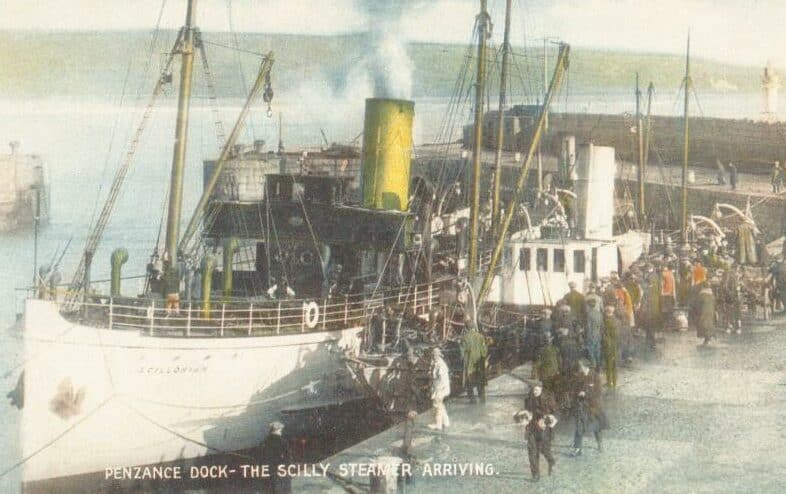
A newspaper clipping from the Western Morning News – dated 3rd February 1926 stated:
“She made her maiden trip from the islands to Penzance yesterday, bringing 25 tons of flowers, and on the mainland a hearty welcome was accorded to Mr. Fred R. Ward (chairman and managing director of the Isles of Scilly Steamship Co.), Mr. Neil MacAllister (captain), and their trim-looking boat, whose design and equipment mark a tremendous advance on the Peninnis or any other steamer previously engaged in the Penzance-Scilly traffic.”
“Scillonians are indeed proud of the Scillonian. They themselves can now make comfortable passage to and from the mainland, and with confidence invite strangers to visit their charming shores. The steamer is 40ft. longer than her predecessor, and has 25ft. beam instead of 22ft. Passengers have the enjoyment of a beautifully-fitted lounge as well as two spacious and nicely-upholstered saloons, one of which contains a bar. Three quarters of the deck is adapted for promenading. The electric lighting arrangements, radiators, and ventilators are of the latest type, and every other modern device necessary has been introduced. Quarters for the captain and crew leave nothing to be desired.”
“The Scillonian has already proved herself a good sea boar in heavy weather. Her triple-expansion engines, of 700-hores power, develop to 750, and she has a guaranteed speed of 12 ½ knots.”
That moment did more than mark the arrival of a new ship. It signalled the beginning of a legacy that would span generations, connecting the Isles of Scilly and the mainland through a century of Scillonian crossings.
This is the year we celebrate 100 years of Scillonian ferries, and the year we prepare to say farewell to Scillonian III, as we look ahead to the arrival of Scillonian IV.
It is both an ending and a beginning. A moment to look back across a century of crossings, and forward to the next generation of Scillonian journeys.
Before the Name: the first crossings
When the Steamship Company was founded in March 1920, the goal was clear: to secure a reliable, regular shipping service between the Isles of Scilly and Penzance.
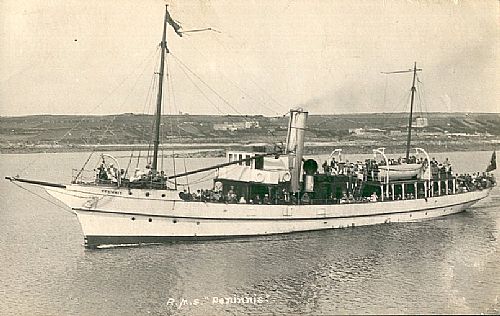
In those early years, the company operated the Peninnis – an ex-Royal Navy fishery protection vessel adapted for passenger service. She became the islands’ connection to the mainland at a time when travel by sea could take six hours or more and was often at the mercy of wind and weather.
Peninnis served faithfully for six years, but it soon became clear that Scilly needed more than an adapted ship. The islands needed a ferry built specifically for their route, their conditions, and their community.
The idea of something new began to take shape.
1926: The Scillonian legacy is born
In November 1925, a purpose-built, steam-powered passenger ferry was launched and named Scillonian by Mrs A. A. Dorrien-Smith of Tresco Abbey.
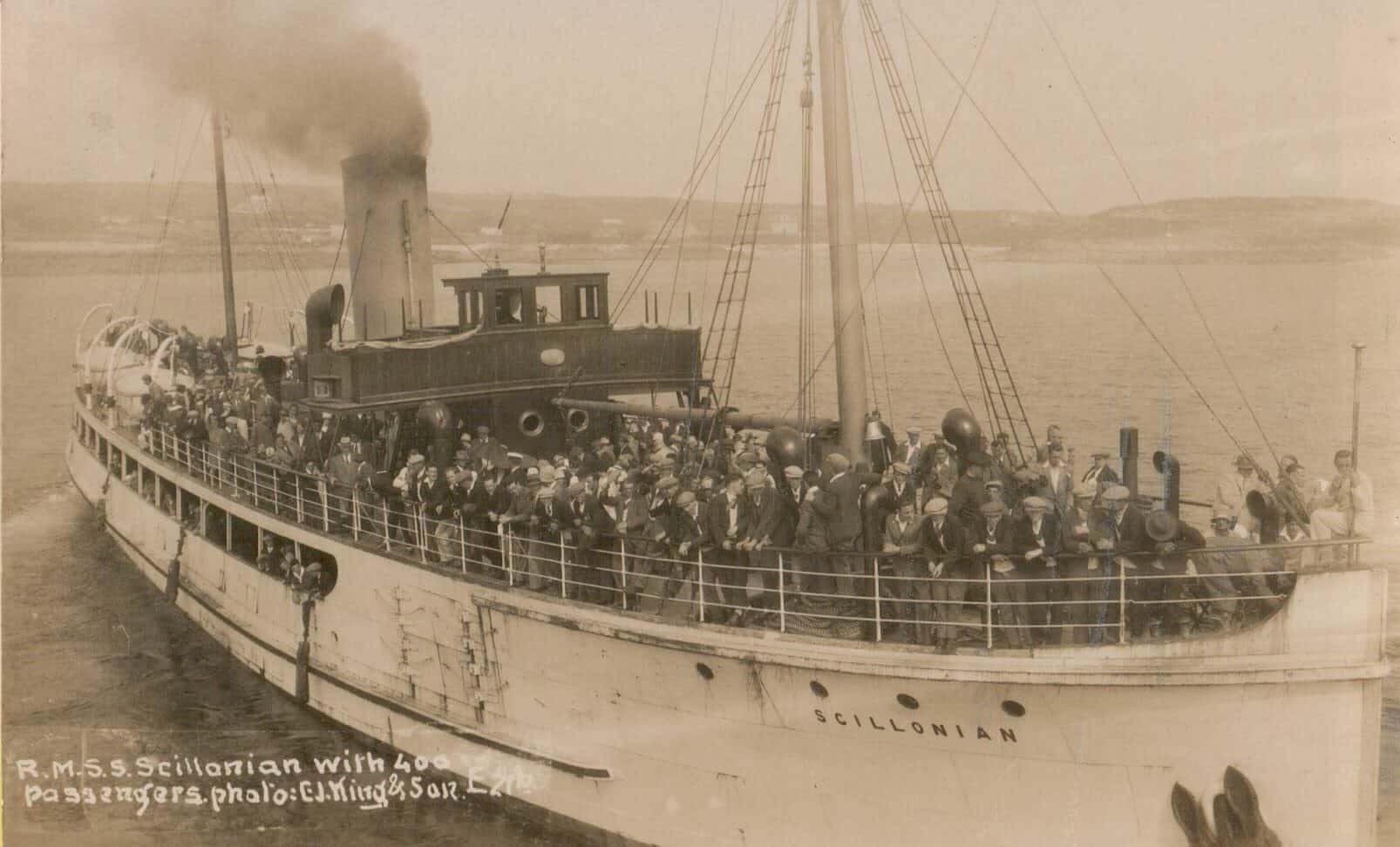
On 2nd February 1926, she completed her first official, timetabled commercial voyage sailing between St Mary’s and Penzance in just over three hours.
At the time, few could have known that this moment would mark the beginning of a name that would span a century.
Scillonian was built to carry around 400 passengers and cargo, but she carried something more – the promise of consistency, connection, and confidence in the crossing. For islanders, she meant reliability. For visitors, she became the first step in an island adventure.
Passengers stood on deck, watching the great pistons of the steam engine rise and fall, feeling the ship drive forward beneath their feet. The journey itself became part of the experience.
A growing tradition
By the late 1920s, the Scillonian name was reaching far beyond Cornwall.
Through partnerships with the Great Western Railway, travellers could purchase tickets from London Paddington, combining an overnight train with a morning sailing. Across the country, iconic railway posters introduced the Isles of Scilly as a place of light, escape, and possibility.
Everything that shaped island life travelled on the Scillonian. From everyday supplies to the famous Scilly narcissi, grown by local flower farmers and sent to mainland markets.
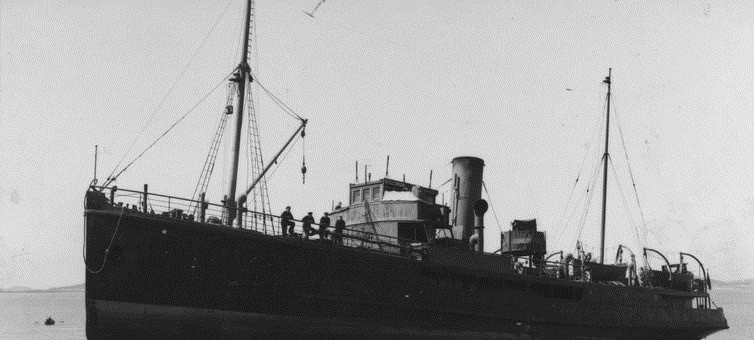
Even during the Second World War, the Scillonian remained in service. Painted black, fitted for defence, and escorted across the sea, she continued her role as a vital link and a reminder that connection to the mainland was not a luxury, but a necessity.
A name passed forward
Time, technology, and the needs of the route continued to evolve.
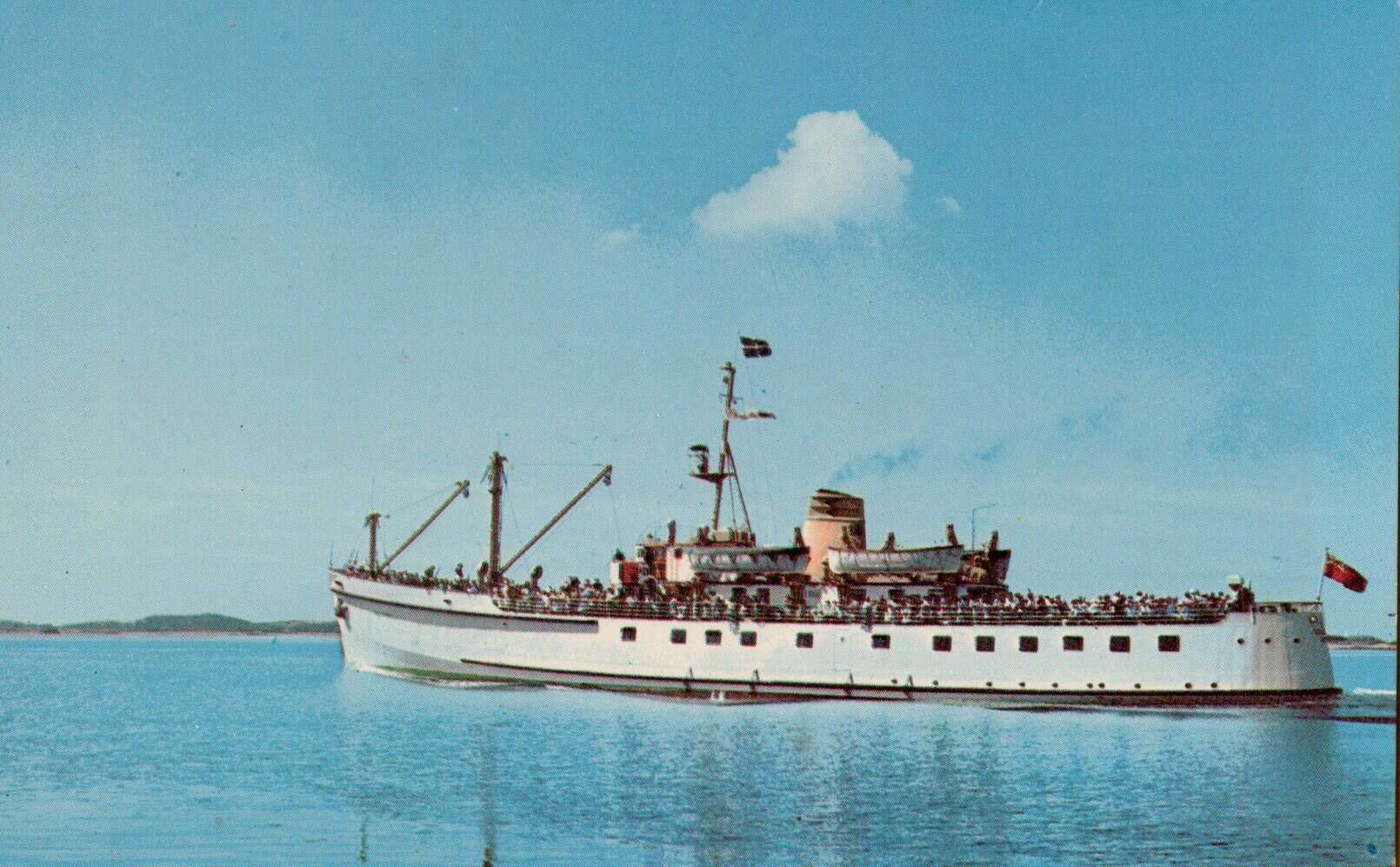
In 1956, Scillonian II entered service – a new, purpose-built vessel designed to carry the legacy forward. For more than two decades, she served as the main passenger ferry between Scilly and the mainland, building on the foundations laid by her predecessor.
For a period, alongside the Scillonian ferries, other vessels such as the Queen of the Isles briefly supported the route at busier times, helping meet growing demand and extending access to the islands beyond the main service.
Scillonian III
Then, in May 1977, a new chapter began as Scillonian III entered service.
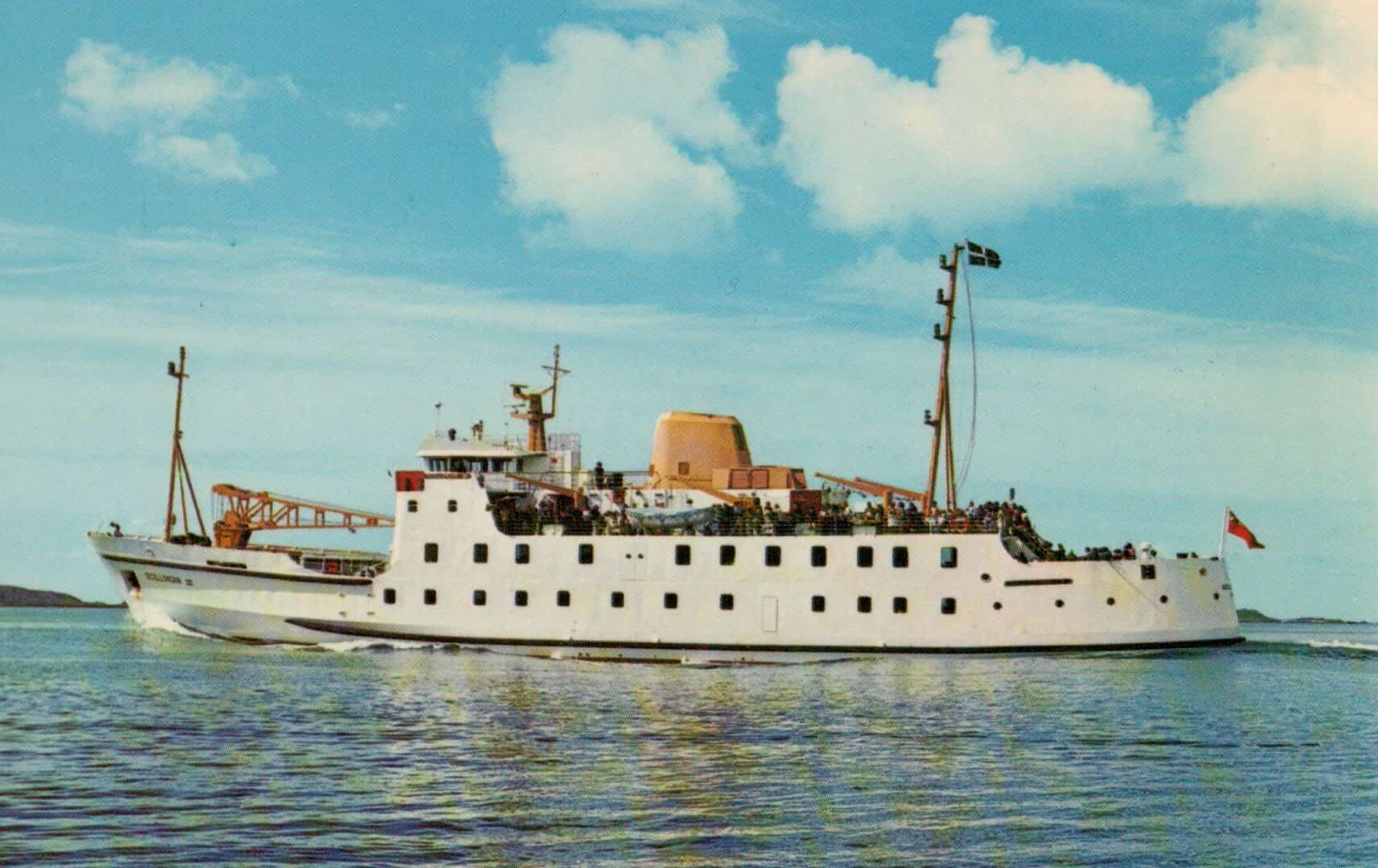
A modern, diesel-powered ferry, built to carry up to 485 passengers and designed to meet the demands of a growing visitor market and an evolving island economy.
With each new Scillonian came new improvements, greater capacity, and enhanced comfort. And with each, the legacy grew stronger. Each vessel serving longer than the last, each one becoming a familiar and trusted presence on the route.
The end of an era for the longest serving Scillonian
For nearly half a century, Scillonian III has been a constant.
She has carried:
- Island residents heading home
- Visitors seeing Scilly for the first time
- Businesses stocking shelves and supplies
- Flowers bound for mainland markets
- Generations of crew who have made the crossing in all seasons and conditions
In 2015, she welcomed her 4 millionth passenger aboard. By 2024, that number had reached 5 million.
Alongside her service at sea, the Steamship Group expanded its role on land and in the air launching Skybus in 1984, developing freight services, engineering support, and facilities that continue to keep island life moving.
But for many, Scillonian III remains the most recognisable symbol of the journey.
A milestone year
Now, in 2026, we reach a rare and remarkable point in the story – one hundred years since the first Scillonian made her historic crossing, and the final year of service for Scillonian III.
For countless passengers, she has been the start of holidays, the return home, the delivery of essentials, and the backdrop to memories made at sea. Her silhouette has become part of the landscape of both Penzance and St Mary’s.
As we prepare to say farewell, we do so with gratitude for the decades she has given, and pride in the role she has played in carrying the Scillonian name forward.
The next chapter: Scillonian IV
In 2027, a new vessel will arrive to take up the name.
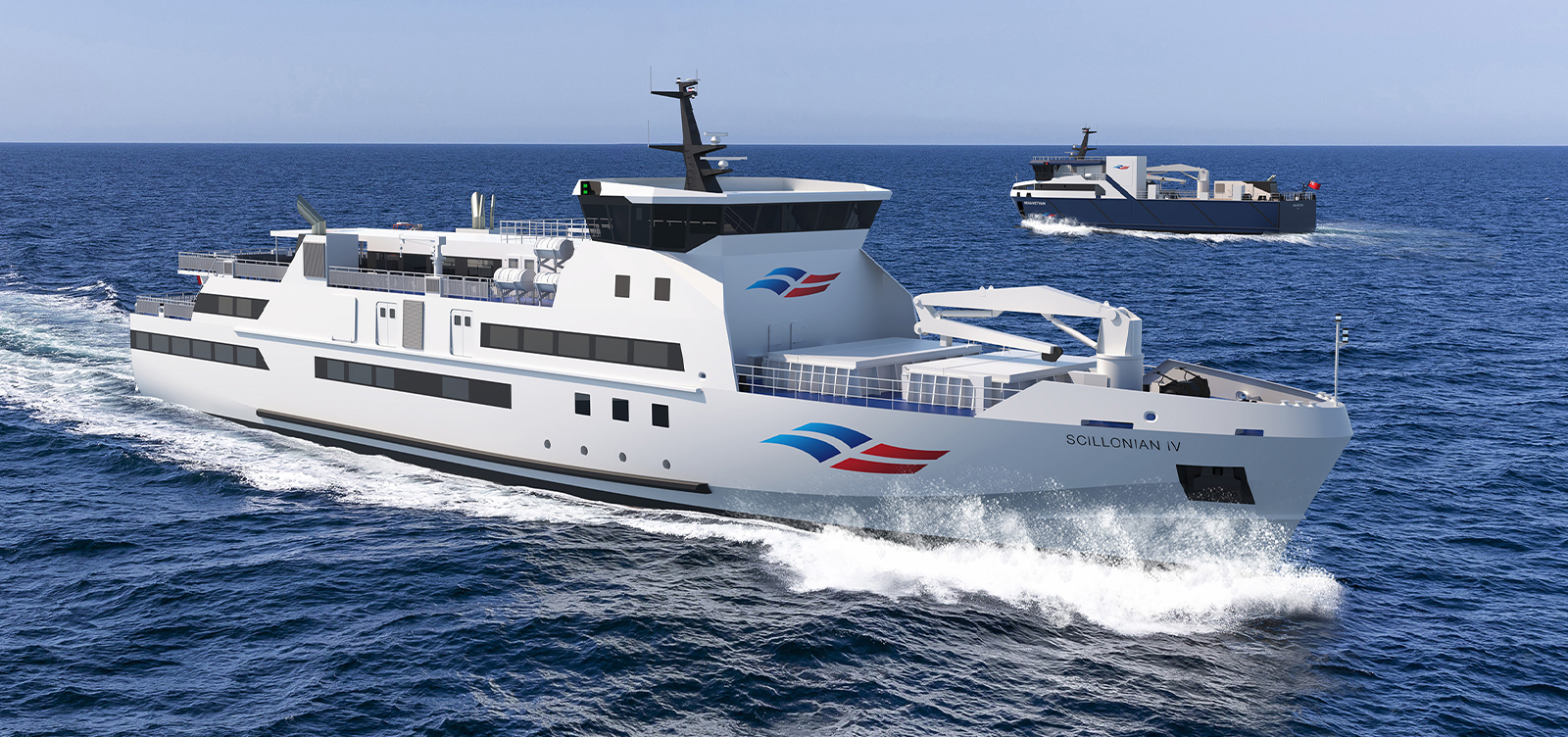
Across three generations of ferries, the Scillonian name has come to mean far more than transport. But the legacy of Scillonian does not live in steel, engines, or decks alone. It lives in the people, the crews, and the memories made between mainland and islands.
Scillonian IV will inherit a history and a spirit shaped by islanders, families, visitors, and future generations.
And with her arrival comes a new era of travel.
Scillonian IV represents progress as well as continuity – new standards of comfort, efficiency, and resilience for the years ahead. A vessel designed for the future, while honouring the journey that has defined the past.
The ships may change, but the spirit of the journey remains.